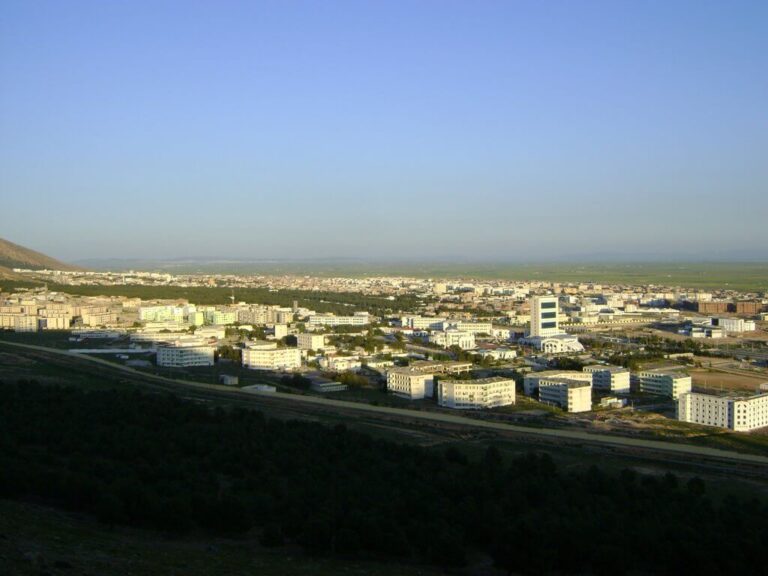
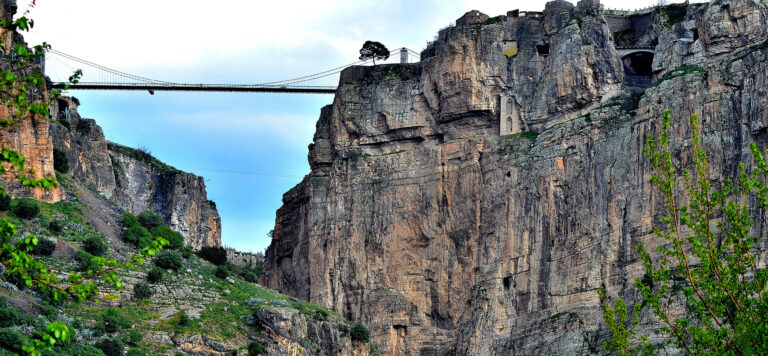
Barika tourism invites you to discover a region where historic remains, steppe landscapes and traditional architecture come together. Located in east-central Algeria, in the Hodna region, the new province of Barika offers a journey of discovery through the ancient city of Tobna, the ksour of M’doukal and the rugged landscapes of Tilatou.
Established in 2026 from part of Batna province, it comprises eight municipalities: Barika, Bitam, M’doukal, Djezzar, Ouled Ammar, Abdelkader Azil, Seggana and Tilatou. Its capital provides a base for exploring a region where the High Plateaus meet the landscapes of the Sahara’s northern fringe. Introduction to Barika province.
The Tobna archaeological site, also known by its ancient name Thubunae, is one of the region’s main historical attractions. Located near Barika, in the Bitam area, it preserves traces of several periods, including Roman, Byzantine and Islamic times.
Tobna will particularly appeal to travellers interested in the history of the Maghreb. Its remains require careful interpretation: a guided visit helps explain the layout of this ancient city and its regional importance. Enquire locally about access conditions before visiting. Discover Tobna.
1. The Tobna archaeological site
Discover the remains of a city that played an important role in exchanges between the Hodna and the Zab. The surviving buildings and fortifications offer insights into several centuries of history.
2. The old ksour of M’doukal
M’doukal stands out for its traditional architectural heritage. Its old ksour reflect an architecture adapted to the climate and community life, with earthen buildings and a compact village layout.
A respectful walk through the inhabited areas offers an opportunity to discover this heritage and its surroundings. Older buildings may be fragile: explore with a resident or local guide whenever possible.
Discover M’doukal and its ksour.
3. The M’doukal palm grove
Alongside the ksour, the palm grove contrasts with the surrounding dry landscapes. It offers an opportunity to experience the oasis scenery and discover the connections between traditional homes, gardens and farming.
Before exploring the gardens, ask local residents for advice and respect private property. Introduction to M’doukal and its palm grove.
4. Tilatou and the landscapes of Djebel Metlili
In the eastern part of the province, Tilatou reveals another side of the region through its mountains, valleys and rocky landscapes. The Djebel Metlili area offers opportunities for photography and scenic exploration.
Plan walks according to the weather, access conditions and your ability. Seek local advice when choosing a mountain route.
Discover Tilatou · Locate Djebel Metlili.
5. The town of Barika
The provincial capital is a starting point for discovering the area’s different municipalities. Take time to explore the town centre, browse local shops and taste the food served in local establishments.
Barika is also a base for arranging excursions to Tobna, M’doukal and the mountain areas to the east. Discover the town of Barika.
The Barika region belongs to the Hodna, a vast area of plains and steppe landscapes. Open horizons, farmland and shifting light provide interesting subjects for photography enthusiasts.
Continue exploring the province’s rural municipalities according to accessible routes and advice gathered locally. Learn more about the Hodna.
Spring and autumn are the preferred seasons for sightseeing and outdoor activities. In summer, plan excursions during the early morning hours to avoid the heat.
Before a mountain outing or a heritage site visit, check the weather and access conditions. Bring water, suitable footwear and sun protection.
✅ To discover the history of the ancient city of Tobna.
✅ To explore the ksour and palm grove of M’doukal.
✅ To admire Tilatou’s mountain landscapes.
✅ To discover the contrasts between steppe, oasis and mountains.
✅ To explore a new province in the heart of the Hodna.
News, events, places, good deals, and travel inspirations.
News, events, places, good deals, and travel inspirations.